Zero-Click Mercenary Spyware Is Riding Ordinary Ad Networks Into Newsroom Devices, and the Ad Does Not Even Need to Be Seen
A suspected Chinese group in BeyondTrust appliances since August, rented scanners billed to stolen AI keys, and every federal bankruptcy court’s notices offline.

Summary
Candiru spyware did not need you to tap anything. Citizen Lab documented it infecting machines at Al Jazeera the moment an ad loaded, sometimes an ad rendered off-screen, and found the same ads reaching high-value government and international networks without establishing infection there. The firm in the middle sat on Google’s and IAB Europe’s approved vendor lists until early October.
Three other stories sat alongside it. A suspected Chinese group has been inside BeyondTrust appliances since late August, reaching the credentials they broker. A criminal forum is renting scanners that bill the victim’s own stolen AI keys. And an attack on one government contractor took down the notice system every federal bankruptcy court depends on.
The ad-delivered spyware forces a question about an attack surface you do not own, and the BeyondTrust zero-day puts self-hosted privileged-access infrastructure into assume-breach territory. The stolen-key economy changes who absorbs the cost of reconnaissance. And the court outage is a reminder that your resilience inherits your contractor’s.
Which of these lands on your desk depends entirely on what you run and who you depend on.
Get The Monday Brief in your inbox every Monday. Subscribe for free, and share it with someone who’d find it useful.
Thanks for supporting The Monday Brief.
Weekly Signals Analysis
The advertising supply chain is now a malware delivery channel with its own billing, targeting, and reach. AdFection shows mercenary spyware riding real ad networks into devices at media outlets and sensitive government networks. Review which unmanaged and personal devices in your executive population touch ad-supported content on the same hardware that holds corporate identity.
Privileged-access appliances are becoming the preferred foothold, not the perimeter you trust. That is five appliance stories in six issues, after Cisco’s firewall managers, Cisco ISE, NetScaler and Fortinet. Armory Castle used a BeyondTrust flaw to reach the credentials it brokers, so treat exposed self-hosted instances as compromised since late August.
Attacker reconnaissance just stopped costing the attacker anything. A forum seller rents autonomous scanning built on stolen AI API keys, shifting the compute bill onto the key owner. The cost structure that used to limit mass scanning is gone.
Your continuity plan quietly depends on contractors you do not monitor. The BAE Systems incident halted federal bankruptcy notices nationwide through a single vendor. Map which critical business functions have no fallback if one supplier goes dark.
What not to over-index on: CVSS-driven patch triage in isolation. We ran this against Microsoft’s 974 fixes five weeks ago and the ratio only widened. This month it is 1,413 fixes with one under active attack, while the BeyondTrust and Ivanti zero-days did real damage below the volume noise. Exploitability in your environment, not score count, should drive the queue.
This Week’s Signals
Signal 1: Mercenary Spyware Rides the Ad Supply Chain Into Devices With No Click Required
Why it matters: Citizen Lab disclosed AdFection, the first technical evidence of zero-click mercenary spyware delivered through ordinary online advertising. Candiru infections reached devices at Al Jazeera, and the same ads appeared on networks at the U.S. Department of Defense, NATO, and the IAEA, which means the delivery channel reaches almost anyone with a phone and an ad-supported app.
What is being misread: The reflex is to treat this as a mobile patching problem. The deeper issue is architectural. The online ad ecosystem is built to profile, fingerprint, and target users at massive scale with near-zero accountability, and a firm named Discover-Tech sat on Google’s and IAB Europe’s approved vendor lists while doing exactly that. The targeting precision spyware operators crave was already productized and sold as advertising.
Think Red (Douglas McKee): The ad network already solved my two hardest problems, finding the right person and reaching their device. I pick this path because the infrastructure does the profiling, the de-anonymization, and the delivery, and it bills someone else for the privilege. No phishing lure or malicious link is required when a real-time bidding exchange will place my payload in front of a specific journalist on a specific network. The ad can even render off-screen, so there is no moment where the target could have made a better choice. What a defender should consider is that the consent frameworks meant to protect users in the EU became another targeting input.
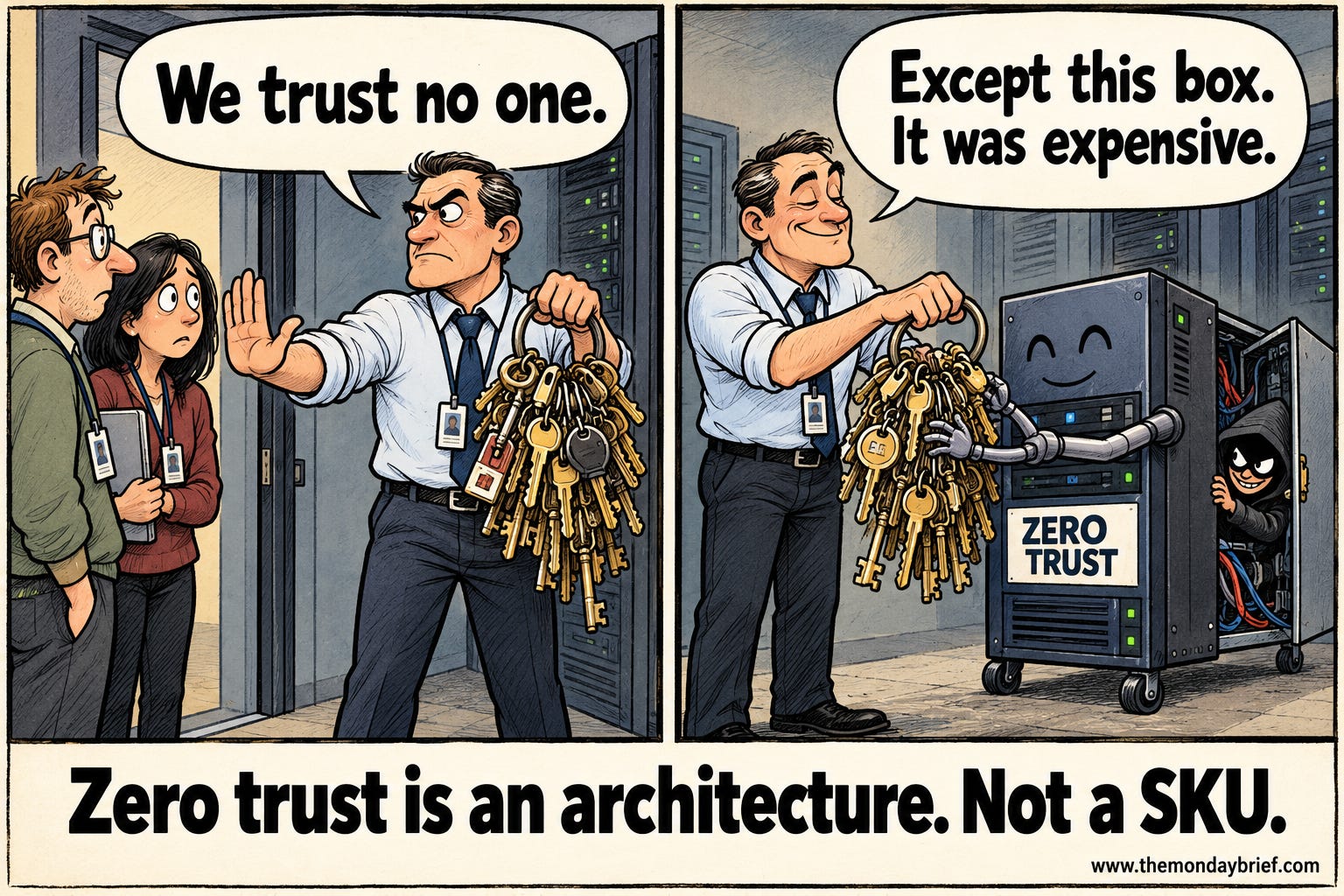
Act Blue (Ismael Valenzuela): The delivery channel sits almost entirely outside your control, on networks you do not own and devices you may not manage, which makes this a textbook case for threat modeling and zero trust rather than for another product purchase. Start with the threat model. Note what Al Jazeera actually recovered from a compromised device, which was a Windows DLL rather than a mobile implant, so the desktop estate needs the same scrutiny the mobile fleet is about to get. Push current OS patches across managed phones and enforce patch level through Conditional Access rather than trusting MDM compliance alone. That handles the devices you can see. It does nothing for the executive reading news on a personal phone that also holds a session token for your tenant. Extend the threat model to that device, then apply the zero trust answer: a device you cannot attest is untrusted by default, and what it can reach is decided by its posture, not by the fact that it holds a valid token. Deploy mobile threat defense and network-level DNS and content filtering that can catch beacon traffic to known spyware infrastructure, and tie high-risk access to device posture so an unmanaged, unattested phone cannot reach your crown-jewel systems. For your highest-risk users, consider ad and tracker blocking at the network layer as a real control, not a convenience. You cannot patch the ad ecosystem, but you can decide what an infected device is allowed to touch, and that decision is the whole point of zero trust. The ad-supported internet now belongs in the threat model whether you budgeted for it or not.
Supporting sources:
Citizen Lab: Exposing AdFection, Report 195
Citizen Lab via The Record: Zero-click spyware delivered through targeted ads
CyberScoop: AdFection and Discover-Tech acting as a spyware facilitator
The Hacker News: Candiru infections at Al Jazeera traced to ads